The Vehicle That Teaches You Who You Are
# The Vehicle That Teaches You Who You Are
There is an old story told among merchants in the desert — not of gold buried beneath the sands, but of something far more ordinary and far more miraculous. It is the story of a man who learned to read the soul of a machine the way a shepherd reads the weather. He did not start with great capital or great certainty. He started with one car, a handshake, and the willingness to listen to what the universe was trying to teach him.
This is not a story about automobiles. Or rather, it is exactly a story about automobiles, and it is about everything else too. Because the path you choose to walk reveals itself only when you begin walking. And somewhere along that path, if you are paying attention, the ordinary becomes the sacred, and a rusting vehicle in a stranger's driveway becomes a teacher.
You are here because something called to you. Perhaps it was a number you saw online — someone turning a few thousand dollars into ten thousand in a matter of weeks. Perhaps it was a friend who seemed to have found a secret door in the wall of ordinary financial life. Whatever brought you here, trust that arrival. Now let us walk the path together and see what it truly requires of you.
## The Desert Before the Oasis: Understanding What Wholesale Really Means
Every apprentice mistakes the map for the territory. They hear the phrase car flipping wholesale and imagine a warehouse of gleaming vehicles waiting to be claimed at impossibly low prices, a simple transaction, an easy alchemy. But wholesale is not a magic word. It is a doorway, and like all doorways, it leads somewhere only if you understand what lies on the other side.
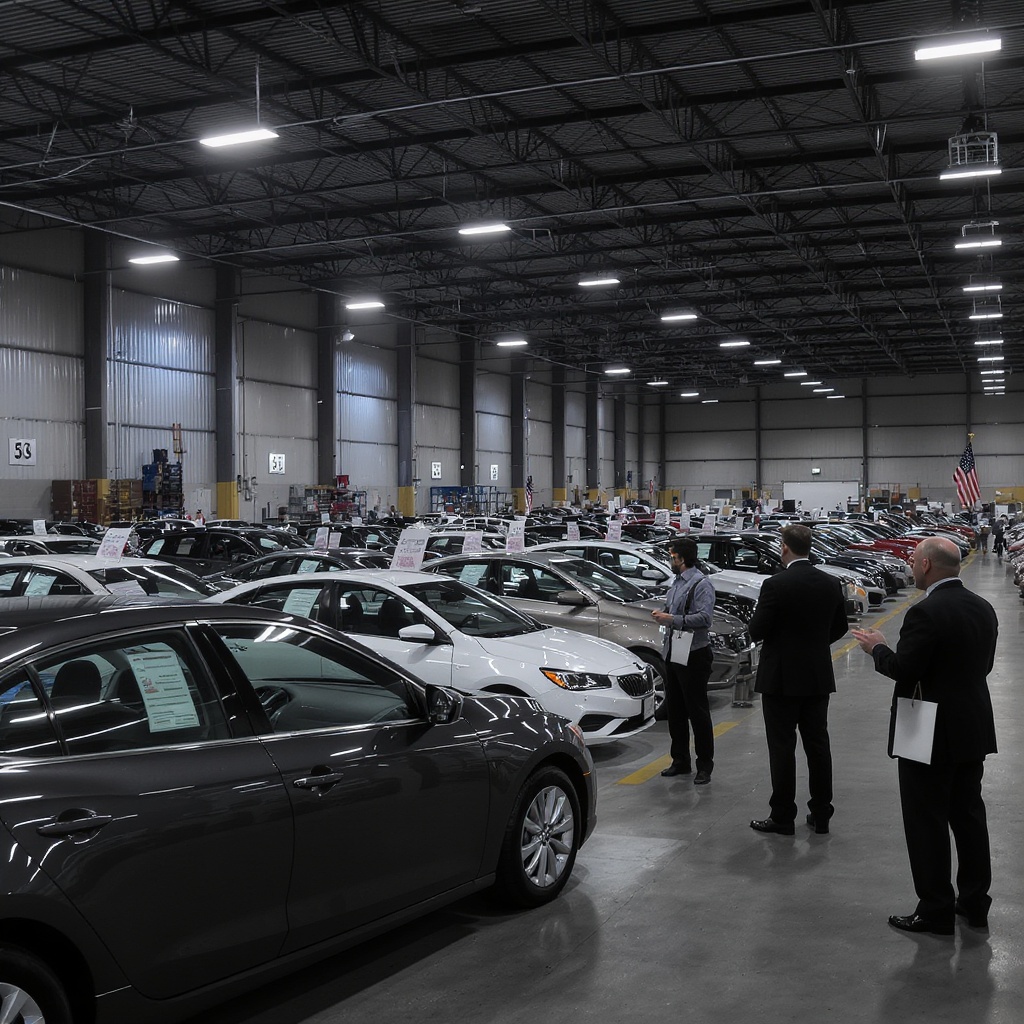
Wholesale, in the language of this trade, means acquiring vehicles beneath their retail market value — typically through dealer auctions, estate sales, fleet liquidations, or direct private purchases where the seller prioritizes speed over maximum price. You are not competing with the weekend shopper on the classified apps. You are moving in a different current of the river, one that flows faster and demands more skill to navigate.
The auctions that matter most — Manheim, ADESA, and their regional counterparts — require a dealer's license in most states, or access through a licensed broker. This is your first real test. Not because licensing is difficult, but because it separates the dreamers from the committed. The process costs between two hundred and five hundred dollars depending on your state, requires a physical business address, and takes anywhere from two to eight weeks. This is the desert you must cross before the oasis. Most people turn back here. The ones who continue discover that the license is not the destination — it is merely the key.
When you understand wholesale as a relationship rather than a discount, everything changes. The best wholesalers are not bargain hunters. They are students of value, fluent in the language that a vehicle speaks when it has been neglected, when it has been loved, when it has more life left in it than its price suggests.
## The Alchemist's Formula: Where the Margin Lives
The old alchemist in the story Santiago encounters does not give away the secret of turning lead into gold. He says only this: the secret is already inside you, and it has always been there. The margin in car flipping wholesale works the same way. It is not hidden in some exotic strategy. It lives in the discipline to know your numbers before you fall in love with a vehicle.
Here is what the numbers typically look like for someone working in the beginner to intermediate range of this craft. You acquire a vehicle at auction or through a wholesale source for between three thousand and eight thousand dollars. After transportation, a basic mechanical inspection, minor reconditioning — perhaps a detail, new floor mats, addressing a warning light — you have invested another three hundred to eight hundred dollars. Your total cost sits somewhere between thirty-five hundred and eighty-five hundred dollars. A vehicle in this range retails privately for five thousand to fourteen thousand, depending on make, model, mileage, and condition. Your target margin is fifteen to thirty percent of the sale price. Anything less and you are working too hard for too little. Anything more and you may be pricing yourself into a longer holding period.
Time is the variable that most beginners underestimate. A vehicle sitting in your driveway for sixty days is not the same as a vehicle sold in two weeks. Carrying costs — insurance, storage, opportunity cost of your capital — erode your margin quietly, the way sand erodes stone. The goal is not the highest price. The goal is the right price, found quickly. Santiago learned that the treasure was never the gold itself. It was who he became while pursuing it. In this trade, the treasure is your velocity — how efficiently you move capital from one opportunity to the next.
The vehicles that teach you the most are the ones you almost bought and didn't, and the ones you bought when you shouldn't have. Both are tuition. Pay it willingly.
## Reading the Soul of a Machine: Sourcing With Wisdom
There is a scene in every great story where the hero must choose between the obvious path and the path that requires greater courage. In car flipping wholesale, that moment comes when you must decide where to source your inventory. The obvious path is the one everyone takes — scrolling Facebook Marketplace, browsing Craigslist, competing with forty other buyers for the same clean sedan with one owner and full service records.
The less obvious path requires you to go where others are not looking. Estate attorneys who need to liquidate vehicles quickly. Fleet managers at small companies retiring their service trucks. Rental car agencies in secondary markets. Dealers who have taken in a trade that falls outside their usual inventory and want it moved fast. These are the sources where the car flipping wholesale advantage concentrates itself, where the spread between what a vehicle costs and what it is worth is widest not because anything is wrong with the vehicle, but because the seller's priority is speed and simplicity, not maximum extraction.
Building these relationships requires the same thing that every meaningful relationship requires — consistency, honesty, and the willingness to show up even when there is nothing immediately in it for you. The dealer who doesn't have the right car for you today will remember you when he does. The estate attorney who sees you handle a transaction with integrity will call you before she calls anyone else next time.
The vehicle that teaches you the most is not the one that makes you the most money. It is the one that reveals something about your own character — your patience, your discipline, your capacity to walk away from something that does not serve the larger journey.
## The Road After the Sale: Building a Practice, Not Just a Profit
There is a difference between a man who flips one car and a man who has built a practice around car flipping wholesale. The difference is not talent. It is not capital. It is the understanding that every transaction is a seed, and what you plant determines what grows.
The mechanics of scaling this work are straightforward but not simple. You reinvest your margins. You track every number — acquisition cost, reconditioning cost, days to sale, final margin — in a simple spreadsheet that becomes your personal scripture, the record of what the market is teaching you. You identify the two or three vehicle types that consistently perform for you in your specific geographic market and you become a specialist rather than a generalist. A specialist in a niche commands better sources, better prices, and faster sales.
In most states you can sell between three and five vehicles per year as a private individual before regulations require you to hold a dealer's license. If you are serious about this work, the license is not a burden — it is a graduation. It opens the wholesale auctions, the dealer networks, the financing relationships that allow you to handle higher-value inventory without tying up all your personal capital.
The ones who last in this work are not the ones who got lucky on their first car. They are the ones who treated each vehicle as a conversation with the market, listened carefully, adjusted, and kept going. They understood that the path itself was the teaching.
## The Journey Always Was the Destination
At the end of the great story, Santiago returns home and finds the treasure buried beneath the very tree where his journey began. He had to travel far to learn what was always near. Car flipping wholesale is like this. The knowledge you seek is not hidden in some secret auction, some insider network, some formula no one will share with you. It is revealed through action, through the discipline of showing up, of learning to see value where others see only inconvenience.
Every car you acquire is a small life that passed through other hands before yours. Every sale is a transfer of possibility. The work is humble and practical and, if you let it be, quietly profound. You are not just moving metal. You are practicing the art of seeing clearly, deciding wisely, and serving someone else's need while honoring your own.
The road is long. Begin.
## Frequently Asked Questions
How much money do I need to start car flipping wholesale?
Most people begin with five thousand to ten thousand dollars in working capital. This allows you to acquire one or two vehicles in the entry-level range while keeping reserve funds for reconditioning and unexpected costs. Starting smaller is possible with consignment arrangements or by partnering with a licensed dealer, but having your own capital gives you speed and autonomy.
Do I need a dealer's license to buy at wholesale auctions?
In most states, yes. Public wholesale auctions like Manheim and ADESA require a dealer's license or access through a licensed broker. Some regions have open auction days for the public, but the best inventory moves in dealer-only lanes. Getting your license is the single most valuable investment you can make in this business.
How long does it typically take to sell a flipped car?
A well-priced vehicle in good condition in a healthy market typically sells within seven to twenty-one days when listed on platforms like Facebook Marketplace, AutoTrader, and Craigslist simultaneously. Vehicles held longer than thirty days usually indicate a pricing issue or a reconditioning gap that the buyer can sense even if they cannot name it. Price honestly and move quickly — velocity is your greatest asset.
The Lane Report
Get The Lane Report — Weekly Wholesale Market Intelligence
Car market data. Auction insights. Deal tips. No dealer fluff.
Ready to flip your first car?
Join FlipLane for $250 and get access to wholesale auctions, deal intel, and a community of car flippers.
Join FlipLane →